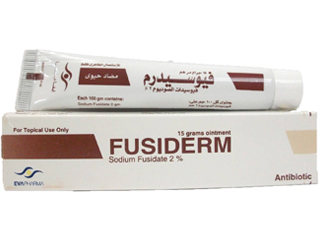
Fusiderm B (Betamethasone + Fusidic Acid) — Cream for Skin Infections with Inflammation
Fusiderm B is a combination topical medicine used on the skin to treat certain bacterial skin infections accompanied by inflammation (redness, swelling and irritation). It contains:
- Fusidic acid — an antibacterial that helps stop the growth of the bacteria causing the infection.
- Betamethasone — a corticosteroid that helps reduce inflammation and itch.
This page provides general information to help you understand how Fusiderm B works, how to use it safely, and what to consider before and during treatment.
Basic product information
| Product | Active ingredients | Dosage form | Where it’s used |
|---|---|---|---|
| Fusiderm B | Betamethasone + Fusidic acid | Topical cream | Skin only (external use) |
Important: Fusiderm B is for external use only. It should not be taken by mouth, and it should not be used in eyes or on mucous membranes (such as inside the nose, mouth, genital area) unless a clinician specifically directs it.
How it works (mechanism of action)
Fusidic acid (antibacterial component)
Fusidic acid targets the way bacteria make proteins. It interferes with bacterial protein synthesis, which helps stop the bacteria from growing and spreading in the skin.
Betamethasone (anti-inflammatory component)
Betamethasone is a corticosteroid. It reduces inflammation by calming immune responses in the skin. This can help relieve:
- Redness
- Swelling
- Itching and discomfort
The combination is designed for situations where bacterial infection and inflammation occur together, such as some infected inflammatory dermatoses.
What Fusiderm B is typically used for
Fusiderm B is used for skin conditions where there is evidence or strong suspicion of bacterial infection along with inflammation. Common examples may include:
- Infected eczematous lesions
- Infected dermatoses where staphylococcal involvement is considered
- Red, inflamed, infected patches or plaques (as assessed by a healthcare professional)
The exact suitability depends on the appearance of the rash, the location, and whether the infection is truly bacterial. If symptoms worsen or do not improve, the diagnosis and treatment plan should be reviewed.
When and how to use it (timing and typical schedule)
Follow the instructions provided with your medicine. In general, topical fusidic acid plus a corticosteroid is used for a short, defined course to reduce inflammation quickly while controlling infection.
- Apply a thin layer to the affected area.
- Typical use is 1–2 times daily, depending on the product direction and the severity of symptoms.
- Use for the shortest duration necessary.
Practical tip: Apply gently and spread only over the affected skin (and a small border around it if directed). Over-application increases the risk of side effects.
How to apply correctly (practical use tips)
- Wash and dry the affected area.
- Wash your hands before and after applying the cream.
- Apply a thin layer evenly over the inflamed, infected area.
- Avoid covering with tight occlusive dressings unless a clinician advises it.
- If you accidentally apply more than intended, remove excess gently and wash hands thoroughly.
What to do if you miss a dose: Apply when you remember unless it is close to the time for the next dose. Do not double up.
Dosing guidance (general)
The correct dose depends on the size and location of the lesion and your age. As a guide:
- Use the smallest amount that covers the affected area.
- Avoid using on very large body surface areas.
- Avoid use for longer than advised.
Children: Children are more susceptible to corticosteroid side effects from topical products, particularly if used over large areas or for extended periods. Use only under appropriate guidance.
Food interactions
As Fusiderm B is applied to the skin, food interactions are not expected. There is minimal likelihood of direct interaction with food or drinks.
However, topical steroid medicines can sometimes affect the skin more broadly if used incorrectly. For overall safety, follow application directions and avoid excessive use.
Alcohol interactions and medicine interactions
Alcohol
There is no specific interaction between alcohol and Fusiderm B that is typically expected, because the medicine is used topically. Still, if you are unwell or taking other medications for a skin condition, it’s wise to consider your overall health and follow your clinician’s advice.
Other medicine interactions
Systemic drug interactions are unlikely due to topical use. That said, interactions can occur in practical ways:
- Other topical products: Avoid combining with other creams on the same area unless advised, as this may irritate skin or worsen dermatitis.
- Other corticosteroids: Do not use additional steroid creams on the same area unless instructed, to avoid increasing steroid exposure.
- Antifungals/antibiotics: If the rash is fungal or another cause, an antibiotic/steroid mix may not solve the problem and may mask symptoms.
Tell your healthcare professional or pharmacist about all medicines you use (including non-prescription products, moisturisers, and herbal preparations).
Pharmacokinetics (what happens in the body)
After applying Fusiderm B to the skin, only a small portion of the ingredients is expected to enter the bloodstream. Absorption can increase if:
- The area is extensive
- The skin is damaged, inflamed, or broken
- The cream is covered with occlusive dressings
- It is used over long periods
Betamethasone: When topical corticosteroids are absorbed in meaningful amounts, they are metabolised by the body and eliminated mainly through the kidneys. Systemic corticosteroid effects are uncommon when used correctly on limited areas for short periods, but risks rise with inappropriate use.
Fusidic acid: Fusidic acid is primarily intended to act locally on the skin. Systemic absorption is generally low with proper use; however, absorption may increase with damaged skin or occlusion.
Because these are topical medicines, systemic monitoring is usually not needed for typical short courses on limited areas, but caution is important in children, on sensitive sites, and with prolonged treatment.
Safety profile and precautions
Common side effects
Most people tolerate Fusiderm B well. Possible local reactions include:
- Burning, stinging or irritation at application
- Redness or dryness
- Itch (may change after inflammation settles)
Less common but important risks
- Skin thinning (atrophy): More likely with higher potency steroids, prolonged use, or occlusion.
- Stretch marks (striae), visible blood vessels, or skin changes: Particularly with long-term or excessive use.
- Perioral dermatitis or steroid acne: Can occur with corticosteroids on the face.
- Worsening or masking of infections: Steroids may reduce visible inflammation even if infection is not fully controlled.
- Allergic contact dermatitis: Uncommon, but can present as worsening rash or itching.
Serious warning signs — seek medical advice promptly
Stop using the cream and seek urgent advice if you experience:
- Rapidly spreading redness, severe swelling or pain
- Fever or feeling unwell
- Pus formation or the infection spreading despite treatment
- Blistering, severe burning, or widespread rash
- Any signs of an allergic reaction (e.g., hives, facial swelling, difficulty breathing)
Where to avoid or use extra caution
- Eyes: Do not apply to eyelids or near eyes unless advised.
- Genital area and other sensitive areas: Higher absorption and higher risk of irritation.
- Large surface areas: Higher steroid absorption risk.
- Broken skin: Absorption may increase.
- Under occlusion: Avoid airtight covering unless told to do so.
Consider resistance and antibiotic stewardship
Fusidic acid is an antibiotic. Bacterial resistance can develop if antibiotics are used inappropriately (e.g., for non-bacterial rashes, prolonged courses, or repeated re-treatment without review). Use Fusiderm B only as directed and consult a clinician if symptoms persist.
Indications and suitability (who may benefit)
Fusiderm B is most appropriate when a clinician or pharmacist has determined that:
- The rash looks compatible with a bacterial skin infection, and
- There is significant inflammation where a corticosteroid may provide symptom relief.
It may be unsuitable if the underlying cause is not bacterial (for example, fungal infections such as tinea, or viral conditions like herpes). Steroids can sometimes worsen certain infections by suppressing local immune responses.
Alcohol and driving
Because Fusiderm B is applied to the skin, it is unlikely to affect driving or operating machinery. Alcohol has no known direct effect on the topical medicine.
What to expect during treatment (timing of improvement)
Many skin infections with inflammation begin to improve within a few days, such as reduced redness and itch. If there is no improvement within about 3–5 days, or if symptoms worsen at any point, treatment should be reviewed.
Reasons you might not improve include incorrect diagnosis, resistant bacteria, fungal infection, eczema flare without bacterial infection, or inadequate duration/amount. Persistent cases should be assessed.
Alternative treatment options
Alternatives depend on the cause of the skin problem. Depending on the appearance and suspected organism, options may include:
- Topical antibacterials without a steroid (when inflammation is not prominent)
- Topical corticosteroids alone (when infection has been excluded)
- Antifungal treatments (if fungal infection is likely)
- Oral antibiotics for more extensive or severe bacterial infections (under clinician guidance)
- Skin-care and emollient therapy for eczema and barrier repair, when appropriate
A pharmacist or clinician can help choose the most appropriate option based on the site, severity and likely cause.
Fusiderm B in Australia: market and legal context
Availability and supply in Australia are influenced by the product’s classification and scheduled status. Topical antibacterial and corticosteroid combination products may be supplied through different channels depending on formulation and regulatory requirements.
Online pharmacies in Australia typically supply medicines in line with Australian regulatory expectations, including:
- Appropriate patient information and product labelling
- Identification of suitability and safety checks (e.g., age, pregnancy/breastfeeding status if relevant, site of application)
- Encouragement to seek medical advice when symptoms persist or are severe
If you are unsure whether Fusiderm B is appropriate for your particular rash, consider checking with a pharmacist for guidance and to confirm the diagnosis.
Recent guidance and antimicrobial stewardship considerations
Over recent years, Australian and international health guidance has increasingly emphasised antibiotic stewardship—using antibiotics only when there is a clear need and for the shortest effective duration. For topical antibiotics, this includes avoiding use for non-bacterial rashes and reviewing if there is no response.
Key practical takeaways:
- Use only on the affected skin as directed.
- Avoid long courses or repeated re-treatment without reassessment.
- If symptoms do not improve quickly, seek advice rather than continuing indefinitely.
Delivery and availability (online pharmacy)
Fusiderm B may be available through online pharmacies depending on brand and stock. Delivery timelines vary by location and dispatch schedules.
- Check the product page for current availability and estimated delivery times.
- Store cream at the temperature stated on the packaging (generally cool and dry, away from direct sunlight).
- Check expiry date before use.
If you need help choosing between different products (for example, alternatives containing only an antibacterial or only a corticosteroid), contacting a pharmacist can be useful.
Frequently Asked Questions (FAQ)
1) Can I use Fusiderm B for any infected-looking rash?
Not necessarily. Fusiderm B is intended for bacterial infections with inflammation. Some rashes that look “infected” may be fungal, viral, or inflammatory eczema. If you’re unsure, seek pharmacy or medical advice—especially if the rash is spreading, very painful, or not improving quickly.
2) How long should I use it?
Use for the shortest duration that works, following the instructions supplied with your product. If there is no improvement within about 3–5 days, or if symptoms worsen, stop and get advice.
3) Can I cover the treated area with a bandage?
Avoid airtight occlusion unless directed by a clinician. Occlusion can increase absorption of betamethasone and raise the risk of skin thinning or other steroid-related effects.
4) Is Fusiderm B safe for use on the face?
Corticosteroids can be more risky on facial skin and may cause steroid-related skin problems. If the face is affected, consult a pharmacist or clinician for suitability and the correct regimen.
5) Can I use it during pregnancy or while breastfeeding?
Safety depends on the extent of treatment and your situation. It’s generally advised to use the smallest amount for the shortest time. Discuss with a healthcare professional for personalised guidance, particularly if applying to large areas.
6) What if the rash gets worse after starting?
Stop using the cream and seek advice promptly. Worsening may indicate the rash is not bacterial, the infection is more severe, or there may be an allergic reaction or inadequate response.
7) Can I apply moisturiser and Fusiderm B together?
You may be able to, but apply Fusiderm B as directed and wait briefly before applying other products. Avoid mixing multiple actives on the same area unless your pharmacist recommends it.
8) Is it okay to drink alcohol while using it?
There is no expected direct interaction with alcohol for a topical cream like Fusiderm B. If you have a skin condition plus other illnesses or medicines, follow general health advice and speak with a pharmacist if you’re uncertain.
9) Will Fusiderm B cause antibiotic resistance?
Resistance risk exists with any antibiotic. Using the cream appropriately—right diagnosis, correct amount, and shortest effective duration—helps reduce the risk. If symptoms persist, don’t keep using it without reassessment.
10) What should I do if I accidentally get it in my eye?
Rinse with water immediately and seek medical advice if irritation continues or is severe.
Summary
Fusiderm B cream combines fusidic acid (antibacterial) with betamethasone (anti-inflammatory). It’s intended for certain skin infections where bacterial involvement and inflammation occur together. Apply a thin layer, use for a short course, and seek advice if there is no improvement within a few days or if symptoms worsen. Following correct use helps improve outcomes and supports responsible antibiotic use.