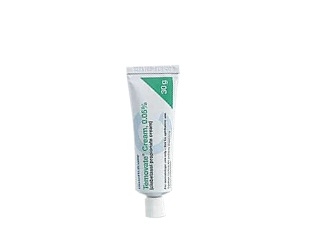
Clobetasol 0.05% Cream/Ointment (Topical Corticosteroid) — Patient Information (Australia)
Clobetasol 0.05% is a high‑potency topical corticosteroid used to calm inflammation and relieve symptoms such as redness, itching, and swelling from certain skin conditions. Because it is very potent, it should be used only as directed and for the shortest time needed.
This guide is written for patients in Australia to help you understand how clobetasol works, how to use it safely, and what to expect. Always follow the instructions given by your doctor or pharmacist and read the product label carefully.
Basic product information
| Category | Details |
|---|---|
| Medicine | Clobetasol 0.05% (topical corticosteroid) |
| Strength | 0.05% |
| Formulations | Cream or ointment (and, depending on availability/brand, may include other topical presentations) |
| Strength level | Very high potency (classed among the strongest topical steroids) |
| Typical use | Short-term treatment of inflammatory skin conditions that respond to corticosteroids |
| Key symptom relief | Redness, itching, swelling, irritation |
How clobetasol 0.05% works (mechanism of action)
Clobetasol is a corticosteroid. When applied to the skin, it helps reduce inflammatory processes by:
- Reducing immune cell activity in the skin
- Decreasing inflammation-related chemicals (mediators) involved in redness and swelling
- Improving the skin’s barrier response in inflammatory flare-ups
- Relieving itching associated with eczema and other steroid-responsive dermatitis
The result is usually noticeable improvement within a few days for many conditions, but the treated area may require careful short-course use rather than long-term continuous application.
Pharmacokinetics (what happens after you apply it)
After topical application, clobetasol can be absorbed through the skin to a limited extent. Absorption increases when:
- the skin is inflamed or damaged
- large areas
- occlusion (covered with airtight dressings/plastic wrap)
Once absorbed, clobetasol follows the usual pathway of corticosteroid metabolism in the body and is ultimately eliminated, mainly via the kidneys. In routine use on small areas and for short periods, systemic effects are unlikely, but they can occur if used excessively.
Systemic side-effects risk
Because clobetasol is very potent, prolonged use or misuse can lead to steroid effects beyond the skin, such as suppression of the body’s natural cortisol production (a rare but important risk).
Typical uses and indications
Clobetasol 0.05% is used for inflammatory skin conditions that are steroid-responsive and considered severe enough to require a high-potency topical corticosteroid.
Common indications (examples)
- Severe eczema/dermatitis (when appropriate and short-term control is needed)
- Psoriasis (certain types and body areas where appropriate; clinician guidance is important)
- Lichen simplex (where inflammation is controlled with short courses)
- Other inflammatory dermatoses prescribed by a healthcare professional
It is not suitable for every skin problem. Some rashes are caused by infections (fungal, bacterial, viral) or non-inflammatory conditions and should not be treated with a steroid alone. If an infection is present, additional treatment may be needed.
When to apply (timing and routine)
Timing depends on the condition and how your skin responds. Typical instructions for high-potency topical steroids often involve:
- Once daily or twice daily application (commonly for a limited period)
- applying at consistent times to maintain effectiveness
- continuing for the shortest time needed to control symptoms
For example, many clinicians use a “short burst” approach and then review progress. If you are not improving within the expected timeframe, seek advice rather than extending the course.
How long should you use it?
Clobetasol 0.05% should generally be used in short courses. The maximum duration depends on the condition, body site, and patient factors. Do not exceed the prescribed/label guidance, and avoid long-term continuous use unless specifically directed.
Dosing guidance (how much to apply)
Dosing is usually measured using the fingertip unit (FTU) method: one FTU is the amount of cream/ointment squeezed along a standard adult fingertip, typically enough to cover an area of about 2 adult palm-sized regions (varies slightly).
Typical approach (general information):
- Apply a thin layer to the affected area
- Use the minimum amount needed for coverage
- Wash your hands before and after application (unless your hands are being treated)
Important: Avoid applying to sensitive areas (such as face, groin, or underarms) unless a clinician specifically directs it, because absorption and side-effect risk can be higher.
Practical use tips (step-by-step)
- Wash and dry the affected area gently. Avoid harsh scrubbing.
- Apply a thin layer of clobetasol 0.05% only to the rash/active inflamed skin. Do not spread it unnecessarily to surrounding unaffected skin.
- Do not bandage tightly or cover with airtight dressings unless your clinician instructs you to. Occlusion can greatly increase absorption and side effects.
- Moisturiser strategy: You may usually apply an emollient to surrounding dry skin and wait before applying clobetasol. Some people apply moisturiser after clobetasol when the timing is separated; follow your healthcare professional’s advice.
- Hand hygiene: Wash your hands after use. If treating your hands, allow the product to absorb fully before washing again.
Mechanism-related response expectations
Many people notice:
- Reduced redness within several days
- Less itching as inflammation settles
- Improved comfort as the skin barrier stabilises
If symptoms worsen, spread, or you see signs of infection (see “Safety profile” below), stop and seek medical advice promptly.
Food interactions
Because clobetasol is applied to the skin and absorbed only in limited amounts under typical use, clinically significant food interactions are not expected. You do not usually need to change your diet when using clobetasol topically.
Alcohol and medicine interactions
Alcohol interactions are not typically expected with topical clobetasol because systemic exposure is generally low in appropriate short-term use.
However, overall caution is sensible if you are using other medicines that may affect immune function or infection risk. Tell your pharmacist or doctor about all medicines you use, including:
- other topical products (especially other steroid creams, retinoids, or disinfectants)
- immunosuppressant medicines
- systemic corticosteroids
- medicines for fungal or bacterial skin infections
Key practical point: Avoid applying multiple strong steroid products at the same time to the same area unless directed, as this may increase side effects.
Safety profile (important risks and precautions)
Clobetasol 0.05% is generally well tolerated when used correctly, but because it is high potency, it can cause unwanted effects if misused. Most concerns relate to skin changes and, rarely, systemic steroid effects.
Local (skin) side effects
- Skin thinning (atrophy)
- Stretch marks (striae)
- Visible blood vessels (telangiectasia)
- Burning, stinging, or irritation at the application site
- Dryness or worsening rash initially in some people
- Changes in skin colour
- Folliculitis (inflamed hair follicles)
Systemic side effects (rare with appropriate use)
If excessive amounts are used, applied to large areas, or used under occlusion or for prolonged periods, clobetasol absorption can increase. Potential systemic effects include:
- Suppression of adrenal function (reversible in many cases but important)
- Effects on blood sugar and fluid balance (more relevant with higher exposure)
- in children: increased risk of systemic effects because skin area to body weight ratio is higher
Infection risk
Steroids can reduce the skin’s inflammatory response, potentially masking symptoms of infection. If you treat a rash caused by fungus or bacteria with a potent steroid alone, it may worsen or spread.
When to seek urgent advice
Contact a healthcare professional promptly if you notice:
- rapidly worsening redness, pain, or swelling
- pus, crusting, fever, or warmth spreading beyond the area
- ring-like patches that may be fungal, or persistent itching despite treatment
- severe irritation or blistering after application
Special populations
- Children: Use only under clinician guidance. Potency and absorption risks are higher.
- Pregnancy and breastfeeding: Discuss with your clinician. Use the smallest effective amount and avoid prolonged use, large areas, or occlusion.
- Elderly: Skin becomes thinner with age, increasing risk of atrophy—extra caution is needed.
- People with skin infections or suspected infection: Seek medical advice before using high-potency steroids.
Practical cautions (what to avoid)
- Do not use on the face, groin, or underarms unless directed. These areas absorb more steroid and are prone to side effects.
- Avoid long-term daily use. High potency steroids should not be used continuously without review.
- Avoid occlusive dressings unless a clinician specifically instructs.
- Do not apply to infected skin unless combined with appropriate anti-infective therapy.
- Do not use for acne, rosacea, or other conditions where steroids may worsen symptoms.
Missed dose
If you forget an application, apply it when you remember unless it is close to the next scheduled dose. Do not apply extra to “catch up.”
What to do if you stop
Symptoms may return when treatment stops, particularly if the underlying condition remains active. Many clinicians use step-down strategies, such as switching to a lower potency steroid or using intermittent treatment, but follow professional advice.
Alternative options (depending on your skin condition)
The “best” alternative depends on diagnosis, body site, and severity. Possible options include:
- Lower potency topical corticosteroids for maintenance or less severe flares
- Non-steroidal anti-inflammatory options (commonly used for some eczema cases, especially in sensitive areas)
- Emollients/moisturisers to restore and protect the skin barrier (often essential long-term)
- Antifungal creams/ointments if the rash is fungal
- Antibacterial treatment if bacterial infection is present
- Phototherapy or systemic therapy for more severe or widespread conditions (specialist-led)
If you’re unsure whether your rash is suitable for steroid treatment, it’s worth getting the diagnosis confirmed—using the wrong treatment can delay healing.
Delivery, availability, and how online pharmacies work in Australia
Availability can vary by brand and formulation (cream vs ointment) and by current Australian pharmacy supply arrangements. Many online pharmacies list clobetasol 0.05% with clear product images and strength confirmation.
When ordering online, check:
- the active ingredient and strength (0.05%)
- the formulation (cream or ointment)
- the expiry date shown on the product listing
- delivery options, estimated dispatch times, and courier coverage
Delivery expectations
- Most orders are dispatched within standard business timeframes after verification and packaging.
- Shipping time depends on your location (metro vs regional) and carrier schedules.
- Store the product at recommended temperatures and keep lids tightly closed.
If you need the product urgently (e.g., for a flare that is affecting sleep or daily function), contact the pharmacy’s support team to ask about delivery timeframes.
Market and legal context for Australia (high-level information)
Medicines in Australia are regulated under the Therapeutic Goods Administration (TGA) framework, with classification and supply rules that can differ by product and strength. High-potency topical corticosteroids may be supplied only under certain conditions.
Online pharmacies in Australia may require patient information and medication review steps to meet regulatory requirements and safety standards. This helps ensure correct use, appropriate product selection, and reduced risk of misuse.
Recent guidance and best-practice considerations
While specific advice can vary by clinical guideline and individual patient situation, the current overall best-practice approach to potent topical steroids includes:
- Using the lowest effective potency for the required condition
- Short courses with reassessment if symptoms do not improve
- avoiding use on high-absorption sites unless directed
- monitoring for adverse skin effects with repeated or prolonged use
- ensuring the rash is correctly diagnosed before prolonged steroid use
If your condition is chronic or recurring, treatment plans often include moisturisers, trigger control, and a strategy to prevent frequent flares rather than repeatedly escalating potency.
FAQ: Clobetasol 0.05% (patient questions)
1) What is clobetasol 0.05% used for?
It’s used to treat certain inflammatory skin conditions that respond to corticosteroids—such as severe eczema/dermatitis and other steroid-responsive inflammatory rashes. It should be used as directed because it is very potent.
2) How fast should it work?
Many people see improvement within a few days. If there is no improvement after the timeframe advised by your clinician/pharmacist, get the rash reviewed rather than continuing indefinitely.
3) Can I use it on my face or around my eyes?
Generally, high‑potency steroids like clobetasol should not be used on the face or near the eyes unless a clinician specifically instructs it. These areas are more prone to side effects and absorption-related risks.
4) Is it safe to use on large areas?
Large-area use increases absorption and the chance of side effects. Use only the amount and duration advised, and avoid occlusion unless directed.
5) What happens if my rash gets worse?
Stop and seek medical advice. Worsening may indicate infection or an incorrect diagnosis. Steroids can mask infection symptoms, so assessment may be needed.
6) Can I moisturise while using clobetasol?
Usually yes. Many people apply moisturiser to the rest of the skin and apply clobetasol only to the inflamed areas. You may need to space applications; ask your pharmacist for a timing plan that suits your routine.
7) Are there food interactions?
No specific clinically significant food interactions are expected with topical clobetasol under normal use.
8) Can I drink alcohol?
Alcohol interactions are not typically expected with topical clobetasol. If you have other conditions or medicines involved, discuss with your pharmacist if you have concerns.
9) Can I use it with other steroid creams?
Avoid using multiple potent steroid products at the same time on the same area unless directed. Combining products can increase potency and side-effect risk.
10) What should I do if I accidentally apply too much?
Remove excess gently (if safe for your product and skin type), avoid reapplying more than directed, and seek advice if you used it on a large area or on sensitive sites. Contact a pharmacist for specific guidance.
11) Is it addictive?
Clobetasol itself is not “addictive” in the way some substances are, but stopping after prolonged use can lead to rebound of symptoms. This is why short courses and step-down plans are important for chronic conditions.
12) What alternative treatments might be considered?
Depending on the diagnosis, options may include moisturisers, lower-potency steroids, non-steroidal anti-inflammatory creams, or anti-infective therapies if an infection is present.
Summary
Clobetasol 0.05% is a very high‑potency topical corticosteroid designed to reduce inflammation and relieve symptoms in steroid-responsive skin conditions. When used correctly—thin layer, small areas when needed, and short duration—it can provide rapid symptom control.
Because it can cause side effects if misused, always follow the recommended dosing, avoid occlusion unless directed, and seek medical advice if you do not improve or if you suspect infection. If you need help choosing the right product strength or how to apply it, your pharmacist is a great starting point.