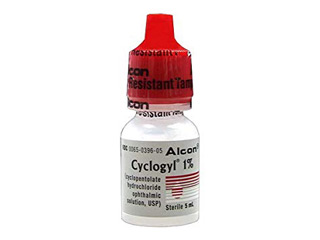
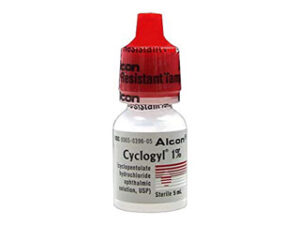
Cyclogyl (Cyclopentolate) Eye Drops
Cyclogyl (cyclopentolate) is an eye drop medicine used to dilate (widen) the pupil and temporarily paralyse the eye’s focusing ability. In Australia, it is commonly used by eye care professionals to help examine the eye thoroughly and to treat certain eye conditions where temporary dilation and relaxation of the eye are helpful.
This guide explains how Cyclogyl works, when it’s used, what to expect after using it, and important safety information for patients. Always follow the instructions provided by your eye care professional or dispensing pharmacist.
Basic Product Information
- Active ingredient: Cyclopentolate
- Medication type: Anticholinergic (antimuscarinic) ophthalmic agent
- Common uses: Eye examination (pupil dilation and cycloplegia), selected ophthalmic conditions
- How it’s supplied: Eye drops (formulation and strength may vary by product brand)
- Where it acts: Localised in the eye, with some absorption possible
Note: Product presentations and strengths can differ. Check the pack label or ask your pharmacist for the exact strength and dosing directions for your specific product.
How Cyclogyl Works (Mechanism of Action)
Cyclopentolate belongs to the antimuscarinic class of medicines. It works by blocking muscarinic receptors involved in:
- Pupil size: It relaxes the circular muscles that control the pupil, resulting in pupil dilation (mydriasis).
- Focusing (accommodation): It also temporarily prevents the ciliary muscle from contracting, producing cycloplegia (a temporary loss of focusing ability).
These effects help clinicians:
- See the retina and optic nerve more clearly during eye examinations
- Measure refractive error more accurately (particularly in children)
Pharmacokinetics (Absorption, Distribution, Metabolism, Excretion)
Because Cyclogyl is used in the eye, most effects occur locally. However, some of the drug can still be absorbed through the eye surface and nasal passages (via drainage through the nasolacrimal duct).
- Absorption: Cyclopentolate can be absorbed through the conjunctiva and may enter systemic circulation after drops drain into the nose.
- Onset of action: Typically begins within minutes after instillation, with maximal effects often within 30–60 minutes (timing can vary by individual and age).
- Duration: Effects generally last for several hours; in some cases, especially in children or with higher dosing, vision changes can persist longer.
- Distribution: Following systemic absorption, anticholinergic effects can occur beyond the eye, although this is less common when correct dosing and techniques are used.
- Metabolism and excretion: Like many anticholinergic agents, cyclopentolate is metabolised and eliminated by the body. Exact details vary between individuals.
Tip to reduce systemic absorption: After instilling the drops, gently press on the inner corner of the eye (near the nose) for a short period (as directed). This can reduce drainage into the nose.
Typical Use in Australia
Cyclogyl is most commonly used for:
- Eye examinations: Pupil dilation and cycloplegia to assist with retinal inspection and accurate refraction testing.
- Selected ophthalmic conditions: In some situations, temporary cycloplegia and pupil dilation may be part of the treatment plan.
Clinicians may choose Cyclogyl based on the patient’s age, symptoms, and the purpose of the examination.
When to Use and Timing Expectations
The timing of pupil dilation and blurred vision varies from person to person. In general:
- After instillation: Expect light sensitivity and blurred near vision.
- For reading: Avoid close work until your near vision begins improving.
- For driving: Do not drive if your vision is blurry or light-sensitive. Plan ahead.
- After examination: Vision may remain affected for hours.
Practical timing plan:
- Arrange assistance if you need to travel home.
- Bring sunglasses (bright light can be uncomfortable).
- If the drops are for a child, plan calm activities until vision returns to normal.
Food Interactions
No specific food interactions are typically expected with Cyclogyl eye drops because the medicine is applied to the eye and intended to act locally. However:
- While food usually isn’t an issue, always keep to any general instructions provided by your clinician.
- If you are using other medicines systemically, consider drug interactions (see below).
Alcohol and Medicine Interactions
Alcohol
There is no well-established direct interaction between alcohol and Cyclogyl eye drops. However, because cyclopentolate can affect vision and cause mild side effects in some people, it’s sensible to avoid alcohol when you must maintain safe vision and alertness (for example, before driving or operating machinery).
Other medicines (important interactions)
Cyclopentolate has antimuscarinic (anticholinergic) properties. Systemic side effects are more likely if it is absorbed into the bloodstream or if you use other medicines with anticholinergic effects.
Tell your pharmacist or eye care professional if you use any of the following:
- Other anticholinergic medicines (some allergy medicines, motion sickness treatments, certain overactive bladder medicines, some antidepressants)
- Medicines affecting pupil size or eye focusing (other ophthalmic drops)
- Medicines with sedative effects (not a direct interaction, but relevant to overall wellbeing and side effects)
In general, patients should avoid unnecessary additional eye drops unless advised. If you use multiple ophthalmic products, ask about spacing between them.
Indications (What Cyclogyl is Used For)
Cyclogyl is indicated for the following types of uses:
- Dilation of the pupil to aid eye examination.
- Cycloplegia to temporarily paralyse the focusing mechanism, improving the accuracy of refractive measurements.
- Selected ophthalmic conditions where cycloplegia/pupillary dilation is part of management (your clinician will specify the reason for use).
Important: Indications can vary depending on local clinical practice and the specific formulation. Always use Cyclogyl for the purpose described by your clinician.
Dosing and How to Apply
Dosing depends on age, the goal of treatment (exam vs condition), and clinical judgement. Eye care professionals may use different dosing schedules, especially for children.
General guidance for patients:
- Use the exact number of drops and timing instructed.
- Do not increase the dose or frequency unless told to by your clinician.
- If you miss a dose for a planned examination, contact your clinician for advice.
How to instil Cyclogyl eye drops (step-by-step)
- Wash your hands thoroughly.
- Shake the bottle if instructed on the label.
- To reduce contamination, avoid touching the dropper tip to the eye or surrounding skin.
- Using clean fingers, gently pull down the lower eyelid to form a small pocket.
- Instil the prescribed number of drops into the pocket without blinking excessively.
- Close your eye gently and keep it closed for about 1–2 minutes.
- Press the inner corner of the eye (near the nose) gently for the same short period if advised—this can help reduce drainage into the nose.
- If using both eyes, repeat for the other eye.
Using with other eye drops
- If you are using more than one eye medication, allow time between products (often at least 5 minutes, or as directed) to prevent wash-out.
- Use ointments last, if prescribed.
Safety Profile (Side Effects and When to Seek Help)
Most people tolerate Cyclogyl eye drops well when used as directed. However, anticholinergic effects can occur, and some side effects relate to pupil dilation and blurred vision.
Common expected effects
- Blurred vision, especially for near tasks
- Light sensitivity due to pupil dilation
- Stinging or mild irritation immediately after instillation
- Temporary difficulty focusing
Possible systemic (whole-body) anticholinergic side effects
These are uncommon when drops are used correctly, but may be more likely in children or if excess is absorbed.
- Dry mouth
- Flushing or hot feeling
- Unusual sleepiness or, rarely, agitation
- Fast heartbeat
- Headache
Serious side effects—seek urgent advice
Contact urgent medical care or seek prompt advice if you experience:
- Severe eye pain or worsening discomfort
- Marked redness with significant pain
- Sudden vision changes beyond expected temporary blurring
- Allergic reaction (swelling of face/lips, difficulty breathing, widespread rash)
- Symptoms of significant anticholinergic effects (especially in children): confusion, extreme drowsiness, persistent fast heartbeat
Who should take extra care
- Children: They can be more sensitive to ocular and systemic side effects.
- People with narrow-angle (angle-closure) risk: Cycloplegic agents that dilate the pupil may rarely precipitate angle-closure in susceptible individuals. If you have a history of glaucoma or narrow angles, tell your clinician.
- Individuals with certain heart rate conditions: If fast heart rate is a concern, discuss with your clinician.
Practical Use Tips (Comfort and Safety)
- Use sunglasses: Light sensitivity is common after dilation.
- Avoid driving until your vision returns to normal.
- Plan near tasks: Reading, screens, and paperwork may be uncomfortable. Prefer low-contrast, well-lit tasks only when comfortable.
- Keep tissues ready: Tears or mild irritation may occur.
- Reduce systemic absorption: Gentle pressure at the inner corner of the eye (as directed) can help, especially for children.
- Wash hands after use: This reduces accidental transfer to eyes or skin (especially important if you have children at home).
- Watch children carefully: Blurred vision can increase the risk of falls or bumping into objects.
Alternative Options (Depending on Purpose)
Depending on the clinical goal and age group, eye care practitioners may consider other agents for cycloplegia and dilation. Alternatives can include:
- Other cycloplegic mydriatics (used for refraction and examination)
- Shorter-acting dilating agents in selected situations
- Non-pharmacological approaches where appropriate (for example, certain imaging techniques may reduce the need for dilation in some contexts)
Your eye care professional can choose the most appropriate option based on your eye health, examination needs, and suitability for you or your child.
Market and Legal Context for Australia
Medicines used in eye care in Australia are governed by the Australian regulatory framework including the Australian Register of Therapeutic Goods (ARTG), and distribution is subject to the scheduling and pharmacy requirements set out by the National Medicines Policy.
Availability, brand presentation, and whether a product is supplied through specific channels may vary. Cyclogyl (cyclopentolate) eye drops are used by eye care professionals and may be available through pharmacies depending on local supply arrangements and the product schedule category.
Advice: If you’re purchasing online, ensure the product is supplied by a reputable Australian pharmacy and that packaging and labels match the product you require.
Recent Guidance and Updates (General Clinical Considerations)
Clinical practice in ophthalmology can evolve, but patient-facing guidance around Cyclogyl typically focuses on:
- Confirming suitable use: Special caution for patients at risk of angle-closure glaucoma.
- Optimising dosing: Especially for children, using appropriate dosing to achieve examination goals while minimising systemic effects.
- Reducing systemic absorption: Encouraging punctal pressure and correct administration technique.
- Clear post-instillation advice: Ensuring patients understand light sensitivity, temporary blurred vision, and driving/working limitations.
If you have particular concerns (for example, your child’s response to the drops or a history of eye conditions), discuss them with your eye care professional or pharmacist.
Delivery and Availability (Online Pharmacy)
When ordering Cyclogyl eye drops online in Australia, availability may depend on stock on hand and product listing. In general, reputable pharmacies provide:
- Safe packaging to protect the bottle and label during transport
- Delivery options to residential addresses and some alternative addresses (availability varies by supplier)
- Tracking for shipment where offered
Storage: Keep the bottle tightly closed and store according to the instructions on the pack. Protect from excessive heat and light.
Check expiry date: Do not use past the expiry date. If the dropper tip looks damaged or the solution changes colour/clarity, contact your pharmacist.
FAQ: Cyclogyl (Cyclopentolate) Eye Drops
How long does Cyclogyl take to work?
Effects usually start within minutes. Pupil dilation and loss of focusing are typically most noticeable within about 30–60 minutes, depending on age and dosing.
How long will my vision stay blurry?
Blurred near vision and light sensitivity commonly last for several hours. In some people, effects can persist longer. Children may experience longer-lasting cycloplegia.
Can I drive after using Cyclogyl?
Usually no. Cyclogyl can cause blurred vision and significant light sensitivity. Only drive when your vision has returned to normal and you feel safe to do so.
Will Cyclogyl make my eyes feel dry?
Some people experience irritation or a “different” feeling in the eye. Dryness can occur, but many patients mainly notice blurriness and light sensitivity.
Is Cyclogyl safe for children?
Cyclogyl is used in children for eye examinations in appropriate doses, but children may be more sensitive to both ocular and systemic effects. Use only the dosing instructions provided for your child and ensure close supervision after instillation.
What should I do if the drops get in my mouth?
Rinse your mouth with water and avoid swallowing. If you accidentally ingest a noticeable amount, seek medical advice—especially for children.
Can I use contact lenses with Cyclogyl?
General advice is to avoid contact lenses during eye examinations requiring cycloplegia unless your clinician specifically instructs otherwise. Soft lenses may absorb ingredients; follow professional guidance.
What if I’m using other eye drops already?
Keep using them unless your clinician advises otherwise. Space the medications by at least 5 minutes (or follow pharmacist directions) to reduce dilution or wash-out.
Is there an interaction with antihistamines or allergy medicines?
Some allergy medicines have anticholinergic properties and may increase anticholinergic effects when combined with cyclopentolate. If you take oral antihistamines regularly, mention this to your pharmacist or clinician.
What happens if I accidentally use too many drops?
Excess dosing can increase the chance of unwanted side effects. If this occurs, contact your pharmacist or seek medical advice—particularly for children.
Can Cyclogyl be used if I have glaucoma?
Patients with glaucoma or narrow-angle risk need special caution. Tell your clinician before using the drops so they can assess suitability.
Summary
Cyclogyl (cyclopentolate) eye drops are designed to dilate the pupil and temporarily relax the focusing mechanism, helping clinicians examine the eye and measure refractive errors accurately. After use, expect temporary blurred vision and light sensitivity. While most side effects are mild and short-lived, it’s important to apply drops correctly, reduce drainage into the nose when possible, and seek urgent medical advice for severe pain, unusual vision changes, or signs of significant allergic or systemic reactions.
If you have questions about how to use Cyclogyl safely, your pharmacist or eye care professional can help you understand what to expect for your specific situation.